
Irrigation amphora: What It Is and How It Works
Watering plants seems like a simple task, but finding the right amount of water and the right watering frequency isn't always easy.
Temperature, light, pot size and plant type all influence how much water a plant needs. That's why maintaining the right level of moisture in the soil can sometimes be a challenge.
But what if we could deliver water to the roots gradually, without having to water every day?
How does an irrigation amphora work?
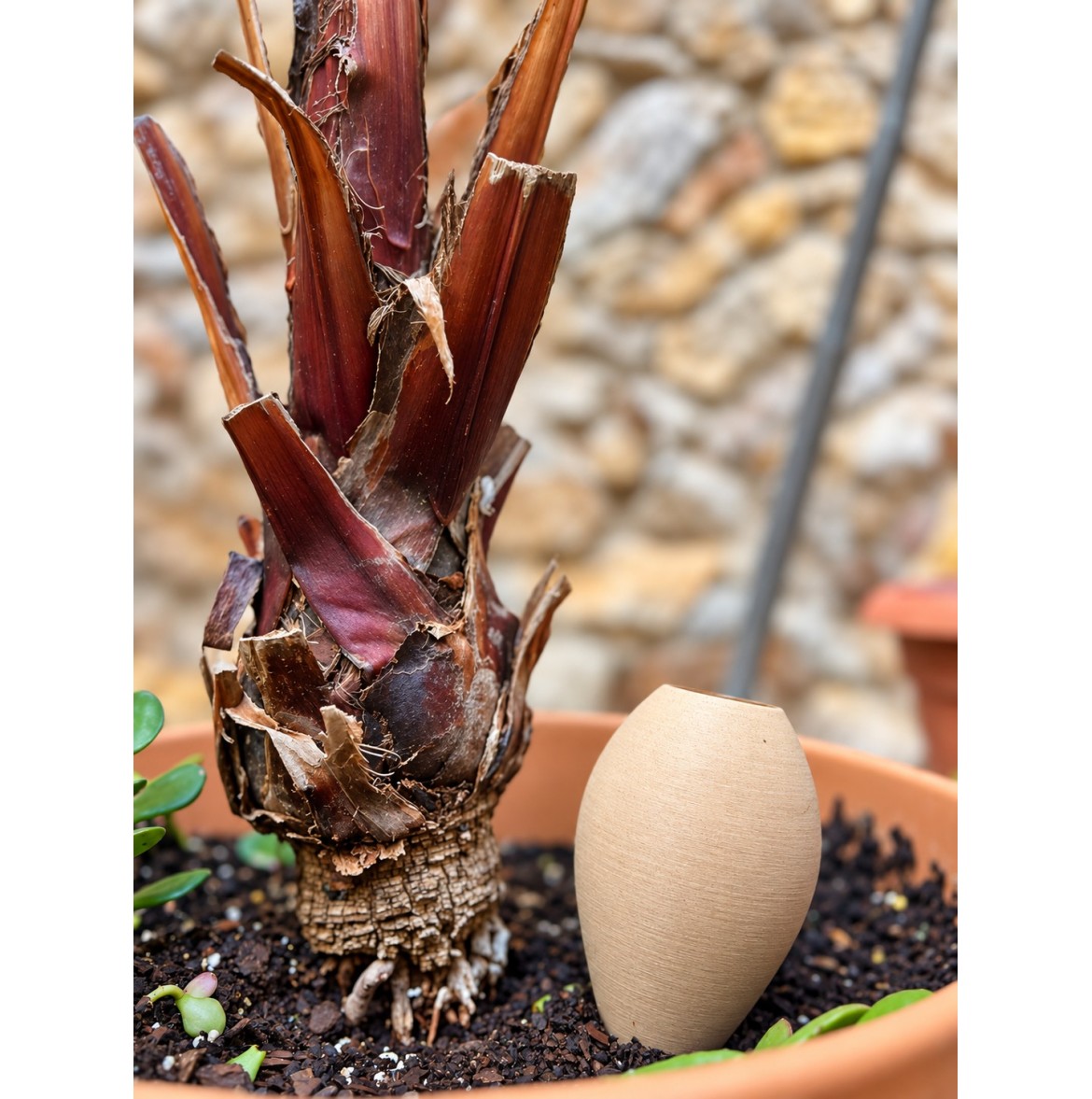
An irrigation amphora is a porous container that is partially buried in the soil and gradually releases water.
The interesting thing is that it doesn't have any holes. The secret lies in the material's microporosity: tiny pores that allow water to slowly pass through its walls and reach the soil.
This way, instead of receiving a large amount of water all at once, the soil can retain moisture for longer.
And although it might seem like a recent innovation, this principle has been used for centuries, with buried clay pots providing water to crops and plants.
A simple system that works without electricity, timers or complicated mechanisms.
What are the benefits for your plants?
The main advantage is that water reaches the soil gradually, helping to prevent sudden changes between completely dry soil and heavy watering.
It also allows you to water less frequently, which is especially useful if you have several plants at home, little time to care for them or are planning to be away for a few days.
However, not all plants need the same level of moisture. The irrigation amphora works particularly well with species that prefer slightly moist soil, while it may not be the best option for cacti and succulents.
How do you use it?
Using an irrigation amphora is very simple, but there are a few things worth keeping in mind to get the most out of it.
-
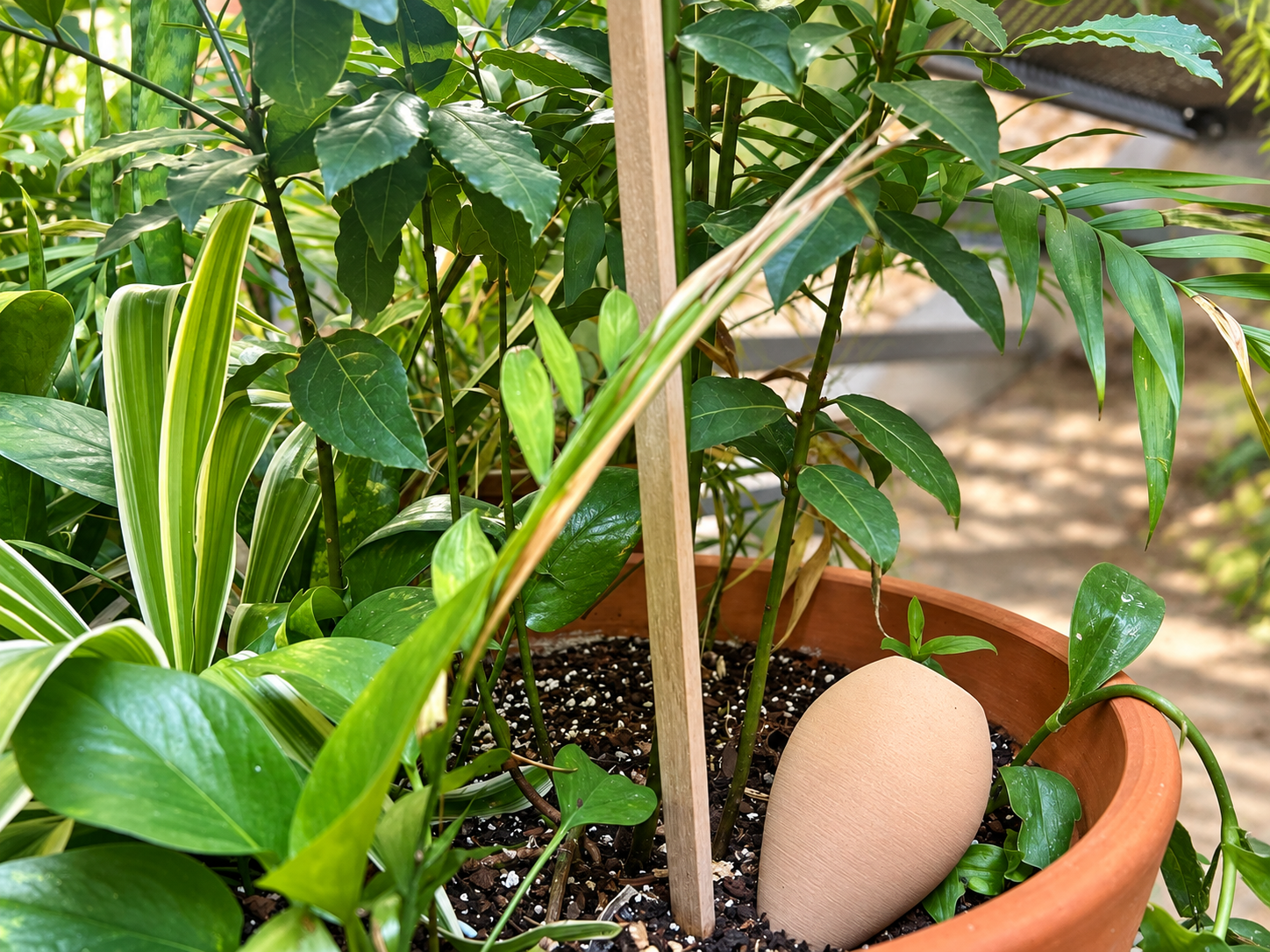
Step 1. Place the amphora in the soil. Partially bury the container in the soil, making sure its walls are in good contact with the surrounding soil. Leave the top opening accessible so you can easily refill it.
-
Step 2. Fill it with water. Fill the reservoir with water and place the lid on top to keep dirt out and reduce direct evaporation.
-
Step 3. Observe how your plant responds. During the first few days, check the soil moisture and how long it takes for the reservoir to empty. This will help you understand the needs of each plant.
-
Step 4. Refill when necessary. Once the reservoir is empty, refill it according to the soil's moisture level. Not all plants need constantly moist soil.
A tip: if the soil is extremely dry, it may help to moisten it slightly before installing the amphora. This encourages better contact with the container and helps water spread through the soil.
A traditional technique adapted to modern life
At CitySens, we've taken this traditional watering principle and adapted it using 3D printing with a material made from PLA and wood.
Our irrigation amphora is locally made to order in Tarragona and has a 350ml capacity, providing approximately two weeks of watering, depending on the plant and environmental conditions.
The structure of the material itself allows water to slowly pass through its walls. In fact, when you fill the amphora, you can see its outer surface gradually becoming moist.
A way of combining tradition, technology and design to make plant care easier.
Because enjoying plants at home also means finding simple ways to care for them without making things complicated.
Comments
No comment at this time!
Leave your comment